

Patinated copper coil S.Copper
Copper rolled products are actively used in the construction segment for roofing, building facades, and are also used as a decorative material in interior spaces.
The patinated coil grade S.Copper is manufactured only from high-purity electrochemically refined copper 99.9%
Due to this, aging in the natural environment will be uniform on each manufactured panel.
During artificial aging of copper, no stains will appear during grinding, and the sheets will be perfectly flat, without waviness.
The surface of the sheet/coil is perfectly clean, without traces of mill scale, without traces of unburned oil stains, has a bright copper color, glossy.
Patinated copper coil is a sought-after rolled product in the construction sector, meeting strict industry standards. In terms of operational characteristics, copper is one of the best modern architectural materials, so the finished product is designed for long-term operation. It has verified dimensions, a large safety margin, and good resistance to adverse environmental factors. The product is easy to process, flexible, and plastic.

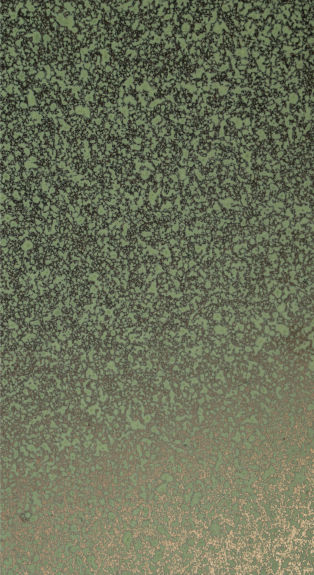
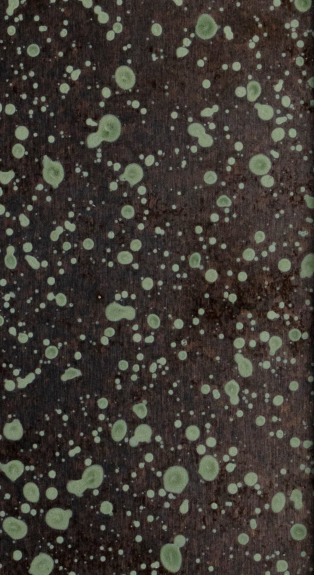




What is patinated copper coil
Patinated copper coil is a copper rolled material whose surface has been artificially "aged" through chemical treatment. At the factory, copper is treated with special reagents that accelerate the oxidation process. As a result, the coil acquires a stable green-blue or brownish-green tone – the same one that natural copper obtains after years in the open air.
How patinated copper coil is manufactured
The process consists of several stages. First, the copper coil is cleaned and degreased. Then a chemical composition is applied that triggers the oxidation reaction. After the desired color is achieved, the reaction is stopped and the surface is sealed with a protective layer (lacquer or wax). All treatment occurs at the factory, so the coil arrives at the site completely ready for installation.
Two types of patina
-
Green-blue (carbonate patina). The classic tone associated with centuries-old cathedrals and historic estates. Appears in natural conditions after 10–15 years.
-
Brown (sulfide patina). Chocolate-brown tone. An intermediate stage before green patina. Found in industrial areas with high sulfur content in the air.
Factories can reproduce both variants as well as shades from dark bronze to blue-green.
Advantages of patinated copper coil
Why choose patinated copper instead of plain or copper-imitation?
Time savings
Natural copper patination is a matter of years. In the first 1–2 years copper darkens to a chocolate tone, then acquires a greenish tint, and only after 10–15 years becomes fully patinated. With ready-made material, you get the "century-old aging" effect immediately after installation.
Uniform color
Natural patina often comes in patches: where there is more rain or shade, the color is more saturated. Artificial patina is applied evenly across the entire surface. This is important for architectural objects where an ideal tone is required.
Protection from corrosion
Patina is not just a beautiful coating, it is a protective layer. It prevents further oxidation and extends the service life of copper to 100 years and more. Artificial patina performs the same function.
Prestigious appearance
Buildings with patinated copper roofing or facades look expensive, prestigious, and fit into historical landscapes. Patina creates a sense of solidity, tradition, and respect for architecture.
Where patinated copper coil is used
Roofing
Patinated copper is an ideal choice for pitched roofs, domes, spires, turrets. The material does not rust, does not require painting, and over time only improves its properties. The color does not change after installation.
Suitable for: temples, historic buildings, private mansions, elite cottages.
Facades
Ventilated facades made of patinated copper are a prestigious solution for buildings that should look "with history" from day one. The coil is mounted on a substructure, creating effective volumetric compositions.
Suitable for: museums, exhibition halls, company headquarters, private residences.
Decorative elements
From patinated coil are made cornices, flashing, downspouts, window surrounds, canopies, trim. These details tie all the architecture together into a unified whole and emphasize the building's status.
Suitable for: any objects where detailing is important.
Restoration
When restoring architectural monuments, it is often necessary to precisely reproduce the appearance of lost copper elements. Patinated coil allows you not to wait 10 years for them to "age" naturally. The material immediately harmonizes with neighboring old details.
Suitable for: cultural heritage sites.
How to choose patinated copper coil
Thickness
| Thickness | Application |
|---|---|
| 0.5–0.6 mm | Standing seam roofing with rafter spacing up to 60 cm |
| 0.7–0.8 mm | Roofing in regions with high snow loads; facades |
| 1.0–1.2 mm | Decorative elements, reinforced cornices, window surrounds |
Type of patina
-
Green-blue (classical). For historic buildings, cathedrals, estates.
-
Brown. For contemporary projects where a calm, warm metal tone is needed without green.
-
Custom (blue-green, dark bronze). For unique design projects.
Protective coating
-
No coating. Patina is set but not additionally protected. Over time it may wear in places of intensive contact (for example, if people walk on the roof).
-
Lacquered. Clear lacquer protects the patina from mechanical damage and preserves the color for decades. Recommended for roofs with maintenance (installation of antennas, snow guards).
-
Waxed. Gives a slight matte sheen and protects from fingerprints. Used for interiors.
Coil width
Standard: 500 mm, 600 mm, 700 mm, 800 mm, 1000 mm. Custom widths are possible (up to 1200 mm). Narrow coil is more convenient for complex shaped elements, wide – for large roof slopes.
Why buy patinated copper coil from a manufacturer
If you decide to buy patinated copper coil, working directly with a manufacturer provides several important advantages.
Manufacturer prices
No distributor or building hypermarket markups. You pay only for the cost of copper, processing, and a reasonable manufacturer margin. Manufacturer prices for roofing patinated copper coil rolls per m² in Moscow are 15–25% below market rates.
Quality control
The manufacturer is responsible for the source copper (without impurities, specific grade), for the chemical composition for patination, and for the final coating. You receive material that will serve for 80–100 years.
Any thickness and width
The manufacturer cuts the coil to your project dimensions. This minimizes waste and speeds up installation. No need to adjust standard sizes "as it happens".
Delivery throughout Russia
We ship products to any region of the RF through verified transport companies. Delivery to a Moscow terminal is often free.
Technical support
We will advise you on the choice of thickness, type of patina, and protective coating for your climate zone and architectural style.
Manufacturer prices for roofing patinated copper coil rolls per m² in Moscow
Approximate manufacturer prices for roofing patinated copper coil rolls per m² in Moscow (order from 100 m², green-blue patina):
| Thickness | Price (no protective coating) | Price (lacquered) |
|---|---|---|
| 0.5 mm | from 3,500 ₽ | from 4,000 ₽ |
| 0.6 mm | from 4,000 ₽ | from 4,500 ₽ |
| 0.7 mm | from 4,500 ₽ | from 5,000 ₽ |
| 0.8 mm | from 5,000 ₽ | from 5,500 ₽ |
| 1.0 mm | from 6,000 ₽ | from 6,500 ₽ |
Prices are approximate. Exact cost is calculated based on the current copper rate and order volume.
For large projects (from 1000 m²), discounts up to 10–15% are possible. Brown patina is typically 5–10% cheaper than green (simpler reagent). Fingerprint protection – from 500 ₽/m².
Frequently asked questions
1. Does artificial patina wear off over time?
High-quality (chemically bound) patina is as durable as natural patina. It does not peel off or wash away in rain. Protective lacquer or wax extend the service life and prevent mechanical damage. Without coating, horizontal surfaces may develop "wear marks" over time in high-traffic areas.
2. Can patinated coil be bent and cut without damaging the coating?
Yes, copper is sufficiently plastic. Patina withstands bending on standard sheet bending machines without cracks or peeling (when the minimum bending radius is observed – 5–10 thicknesses). It is recommended to use equipment with soft rollers.
3. What is cheaper – patinated copper or plain copper with natural aging?
Patinated copper is 20–40% more expensive than plain copper due to additional processing. However, you save time (no need to wait 10–15 years) and eliminate uneven coloring. If your budget allows, this is a worthwhile investment in prestige.
4. How to maintain a roof made of patinated copper?
Maintenance is minimal – rain washes away dust. For heavy contamination (for example, after construction work) – soft cloth, water, and soapy solution. Do not use abrasives, acids, or metal brushes. Lacquered patina should not be washed with solvents.
5. What is the service life of patinated copper coil?
The copper itself lasts more than 100 years. Patina and lacquer coating – 30–50 years without recoating. Thus, a roof made of patinated copper will serve at least 50–80 years without repair, and with careful maintenance – all 100 years.
Ideal for roofing and facades
Patinated copper coil is a material for those who value beauty, status, and durability. It allows you to achieve a noble green-blue or chocolate tone right away, without decades of waiting. Ideal for roofing, facades, restoration, and decorative elements.
If you want to buy patinated copper coil from a manufacturer, contact "Cladding Solutions". You will receive quality material with uniform color, any thickness and width, at manufacturer prices for roofing patinated copper coil rolls per m² in Moscow. Delivery throughout Russia. Make your project unique from day one