


The honeycomb core is manufactured from aluminium foil 0.03–0.15 mm thick by stretching or corrugating methods. Cell size and foil thickness are determined by calculation — based on the required rigidity and loads of a specific project. Outer sheets of pre-painted aluminium (Coil Coating, PVDF / HD PE / PE) are glued to the core in special fixtures and cured under controlled conditions — in an oven or autoclave. Result: a monolithic structure with guaranteed interlayer adhesion and stable geometry across the entire panel format.
Honeycomb panel S.Comb
S.Comb — three-layer panel: two aluminium sheets with factory polymer coating, bonded with a honeycomb core made from aluminium foil. The construction ensures high rigidity with minimal weight: a 20 mm thick panel weighs 6.3 kg/m² — with no deflection or "flutter" on formats up to 1500 × 7500 mm.
For the architect, this means confidence in the flat plane at any format and freedom in geometry — the panel can be routed, bent, and shaped into curved forms without loss of structural integrity. For the developer, it means reduced load on the substructure, less metal in the load-bearing system, and shorter installation timelines.

Color collections
Coating types
PVDF (polyvinylidene fluoride)
PVDF — fluoropolymer coating based on polyvinylidene fluoride (minimum 70% PVDF resin, Kynar 500® / Hylar 5000® standard). Two- or three-layer system up to 45 μm thick. Colour and gloss are preserved throughout the facade's service life — without fading or chalking. Complies with QUALICOAT Class 3 and GSB Premium. Projected service life on open facade — from 25 years.
Recommended for: ventilated facades, roofing, coastal and industrial zones.
Super-polyester (HD PE)
Super-polyester (HD PE) — modified polyester coating, High Durable class, up to 45 μm thick. UV resistance — category RUV4 (4 out of 5 per EN 13523-19). Optimal balance between performance characteristics and cost for projects with moderate atmospheric exposure.
Recommended for: facades and roofing in moderate climate conditions.
Polyester (PE)
Polyester (PE) — polyester-based coating, 25 μm and above. Stable adhesion, good workability in processing. Lowest cost in the S.Comb coating range. Due to limited UV resistance, application on open facades is not recommended.
Recommended for: interior systems — ceilings, partitions, finishing public and retail facilities.

Advantages


Fire safety.
Aluminium substrate — non-combustible class per GOST 30244-94 (Method I). Applicable to social, transport, and industrial infrastructure facilities without height restrictions.

Aesthetics and variety.
Contemporary designs. Wide selection of colours and textures enables the creation of unique and attractive facade and interior solutions that correspond to architectural styles and the preferences of architects and clients.

Geometric stability.
The honeycomb structure eliminates deflection and "flutter" on large formats up to 1500 × 7500 mm. Perfectly flat surface — critical for facades with reflective coatings.

Corrosion resistance.
Aluminium alloys of series 3xxx / 5xxx combined with polymer coating ensure durability in urban, industrial, and marine atmospheres.

High rigidity-to-weight ratio.
At 20 mm thickness, rigidity EI is 139 000 kNcm²/m with weight up to 7 kg/m² — 3–4 times lighter than solid aluminium of equivalent rigidity. Reduces load on substructure and shortens installation labour.

Sound insulation.
Sound insulation index Rw — from 21 dB (10 mm thickness) to 25 dB (25 mm thickness). Relevant for facilities with enhanced acoustic comfort requirements: airports, metro, shopping centres.

Specific weight up to 6.3 kg/m²
Application areas
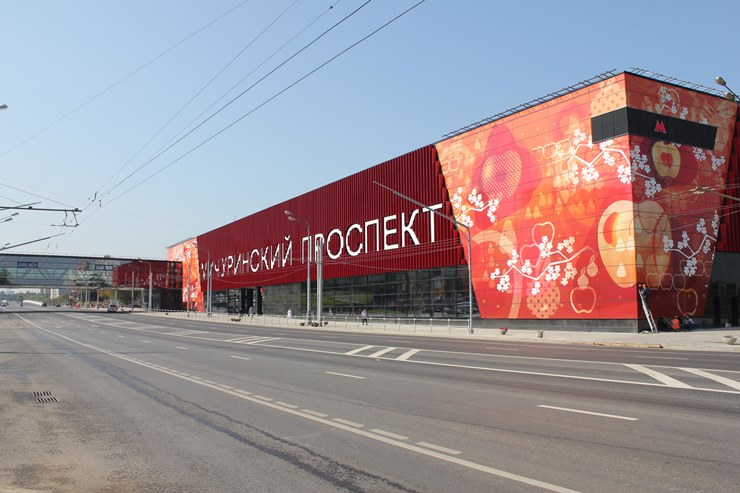
S.Comb honeycomb panels are used for cladding ventilated facades. The panels provide strength, a flat surface, and facade durability. Also in interior spaces in offices, shopping centres, airports, metro systems, and public spaces, where lightweight design, fire safety, and aesthetics are important. Panels can have various decorative coatings. The structural rigidity of the panels allows the creation of unique architectural elements, such as curved walls and recessed panels.
Facade
Interior
Project applications
Manufacturing technology

Get a consultation and find out the cost

Other materials


Buy honeycomb panels for facade: lightweight and strength for modern architecture
A facade is a building's calling card. It should be beautiful, reliable, and durable. One of the best cladding materials is aluminium honeycomb panels. They combine low weight, high rigidity, and huge design possibilities. If you want to buy honeycomb panels for a facade, it is important to understand their structure, advantages, and installation features. Where are aluminium honeycomb panels used, how to calculate the cost and sizes of aluminium panels with honeycomb core for home cladding per m² in Moscow, and why it is beneficial to order from a manufacturer — Cladding Solutions with delivery throughout Russia.
What are honeycomb panels and how are they constructed
Honeycomb panels are a multilayer composite material. They consist of two thin aluminium sheets (facings) and an internal core in the form of honeycomb. This structure is called an aluminium honeycomb.
Honeycomb panel construction
-
Top and bottom sheets — aluminium 0.5–1.0 mm thick, coated with polyester, PVDF, or other polymer coating.
-
Honeycomb core — hexagonal cells made from aluminium foil 0.05–0.1 mm thick. Cells can be various sizes (6 to 25 mm).
-
Adhesive layer — special thermally activated adhesive that bonds the facings and honeycomb into a single structure.
Total panel thickness — from 6 to 50 mm and more. The thicker the panel, the higher its rigidity and thermal insulation properties.
Why honeycomb?
The hexagonal shape of cells is the strongest at minimum weight. It is a natural solution that mirrors the structure of bee honeycomb. With the same thickness, a honeycomb panel is 5–10 times stiffer than a solid aluminium sheet and 2–3 times lighter than a steel sheet of equivalent strength.
Advantages of honeycomb panels for facades
Honeycomb panels for exterior facade cladding have gained popularity due to a unique combination of properties.
Perfect flatness
Thanks to high rigidity, panels do not "move" in the wind, do not produce a "mirror effect" (distorted reflection), and maintain a perfectly flat surface even over large spans.
Low weight
A honeycomb panel 20 mm thick weighs only 6–8 kg per square meter. This is 2–3 times lighter than ceramic tile and 4–5 times lighter than natural stone. Load on bearing structures is minimal.
High strength
Despite their lightness, honeycomb panels withstand high wind loads, impacts, and vibration. They do not deform from temperature fluctuations and do not crack.
Thermal and sound insulation
The honeycomb structure is an excellent insulator. Air in the cells prevents heat and sound transmission. A 20 mm thick panel has thermal insulation comparable to mineral wool 30–40 mm thick.
Wide design possibilities
Panels can be painted any RAL colour, have a pattern applied, be perforated, or have a 3D shape (3D panels). Any size and configuration is possible.
Where honeycomb panels are used
Ventilated facades
The most common application. Panels are attached to a substructure with an air cavity. This allows insulation of the building and protection of the facade from moisture.
Suitable for: office centres, shopping complexes, residential buildings, hotels, airports.
Roofing and soffits
Light and rigid panels are used for soffit cladding, roof facing, and creation of fascias and canopies.
Suitable for: any buildings with horizontal projecting elements.
Interiors
Honeycomb panels are used for wall, column, and partition cladding, lift lobbies. They look modern and are easy to maintain.
Suitable for: business centres, retail spaces, exhibition areas, hotel lobbies.
Industrial facilities
Panels are used for cladding hangars, warehouses, workshops, where lightness and corrosion resistance are important.
Sizes and technical characteristics
Standard sizes of aluminium honeycomb panels for home cladding vary widely. The manufacturer can produce panels of almost any size for a specific project.
Typical parameters
| Characteristic | Value |
|---|---|
| Panel thickness | 6, 8, 10, 12, 15, 20, 25, 30, 40, 50 mm |
| Panel width | up to 1500 mm (sometimes up to 2000 mm) |
| Panel length | up to 6000 mm (sometimes up to 8000 mm) |
| Facing thickness | 0.5–1.0 mm |
| Honeycomb cell size | 6–25 mm |
| Foil thickness | 0.05–0.1 mm |
| Weight per 1 m² (20 mm panel) | 6–8 kg |
| Temperature range | −50°C to +80°C |
Customisation options
-
Any RAL colour (matte, gloss, metallic).
-
Perforation (round, square, slot perforations).
-
3D routing (relief pattern).
-
Bending and profiling (edges, corners, complex shapes).
Why it is profitable to buy honeycomb panels for a facade from a manufacturer
If you have decided to buy honeycomb panels for exterior facade cladding, working directly with a manufacturer offers several important advantages.
Prices without middlemen
Without distributor and retail markups. Buying from a manufacturer costs 15–30% less.
Quality control
The manufacturer is responsible for every stage: from aluminium raw material to final coating. Panels undergo incoming inspection, intermediate checks, and final product testing.
Any size to specification
The manufacturer will produce panels exactly to your drawing. This minimises waste on-site and speeds up installation.
Delivery throughout Russia
The manufacturer ships products to any region of Russia through verified transport companies. Delivery to a Moscow terminal is often free.
Technical support
The manufacturer will advise on thickness selection, coating type, and fixing method. If needed, they will provide installation recommendations.
Cost of honeycomb panels per m² in Moscow
Price depends on several factors:
-
Panel thickness.
-
Aluminium facing thickness.
-
Coating type (PE, HD PE, PVDF).
-
Honeycomb cell size.
-
Order volume.
-
Availability of perforation or routing.
Approximate cost of aluminium honeycomb panels for home cladding per m² in Moscow (for bulk orders from 500 m², PVDF coating, 0.7 mm facings):
| Panel thickness | Price per m² |
|---|---|
| 10 mm | from USD 30 |
| 15 mm | from USD 33 |
| 20 mm | from USD 38 |
| 25 mm | from USD 43 |
| 30 mm | from USD 47 |
Prices are indicative. Exact cost is calculated individually for each project.
For semi-bulk orders (under 500 m²) prices may be 10–20% higher. For large projects (from 2000 m²) additional discounts are possible.
Frequently asked questions
1. How do honeycomb panels differ from aluminium composite panels (ACP)?
In ACP, the internal layer is mineral filler (polyethylene with additives). The panel becomes solid but less rigid. In honeycomb panels, the internal layer is hollow aluminium honeycomb. This provides maximum rigidity at minimum weight. Honeycomb panels are 3–5 times stronger than ACP at the same thickness.
2. Can honeycomb panels be used on curved facades?
Yes. Panels can be bent on special equipment in one direction (cylindrical bending). For complex 3D forms, perforated or routed panels are used, which acquire the necessary shape by weakening the facings.
3. How are honeycomb panels attached to the facade?
The most common method is concealed fixing with clips (Z-shaped profiles). Clips are fixed to substructure rails, and panels are hung on them and secured with rivets or screws at the edges. Open fixing with self-tapping screws is also possible (cheaper, but screw heads are visible).
4. How to care for a facade made of honeycomb panels?
Maintenance is minimal. Natural rainfall is sufficient. For heavy soiling, wash with a soft cloth and soapy water. Do not use abrasives, acids, solvents, or high-pressure water (over 30 bar).
5. What is the service life of honeycomb panels?
With quality coating (PVDF) — from 30 to 50 years. Manufacturer warranty typically covers panel integrity for 10–20 years and coating colour for 5–10 years. Aluminium does not rust, honeycomb does not rot or delaminate with proper installation.
Aluminium honeycomb — a durable solution for exterior cladding
Honeycomb panels for facades are a modern, lightweight, and durable solution for exterior cladding of buildings. Aluminium honeycomb provides a unique combination of rigidity, low weight, and thermal insulation. Panels are suitable for any facility: from private homes to high-rise business centres.
If you want to buy honeycomb panels for exterior facade cladding of buildings, contact the manufacturer. You will receive quality material with warranty, any size for your project, and fair prices. To find out the cost and sizes of aluminium honeycomb panels for home cladding per m² in Moscow, contact our specialists — Cladding Solutions. Make your facade modern, reliable, and beautiful for decades to come.