

Oxidised copper coil S.Copper
Copper rolled products are actively used in the construction segment for roofing, building facades, and are also used as a decorative material in interior spaces.
The S.Copper oxidised copper coil grade is manufactured only from high-purity product of electrochemical refined copper 99.9%
Thanks to this, aging in a natural environment will be uniform on each manufactured panel.
During artificial aging of copper, no stains will appear during grinding, and the sheets will be perfectly flat, without wave.
The surface of the sheet/coil is perfectly clean, without traces of mill marks, without traces of unburnt oil spots, has a bright copper color, glossy.
Oxidised copper coil is a sought-after rolled product in the construction industry, meeting strict industry standards. In terms of operational characteristics, copper is one of the best modern architectural materials, so the finished product is designed for long-term operation. It has verified dimensions, a large safety margin and good resistance to negative environmental factors. The product is easy to process, it is flexible and plastic.



What is oxidised copper coil
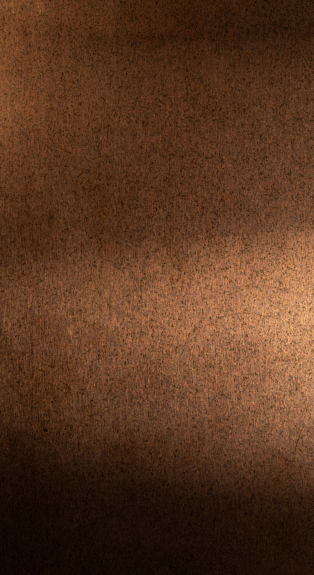
Oxidised copper coil is a rolled copper material whose surface is artificially oxidised at the factory. As a result of a chemical reaction, a layer of copper oxide (CuO and Cu₂O) forms on the copper, which has a dark brown, chocolate or almost black shade. This color corresponds to the natural state of copper after 3–7 years of operation - before green patina begins to form.
How oxidised copper coil is produced
The process begins with preparation of a copper coil. Then it is treated with special chemical compositions that initiate the oxidation reaction. Unlike patination (green color), oxidation is stopped at the stage of brown oxide. After this, the surface is rinsed, and if necessary, a transparent varnish or wax is applied. All processing takes place in factory conditions, which guarantees color uniformity and shade stability throughout the entire length of the coil.
How oxidised copper differs from patinated
| Characteristic | Oxidised copper | Patinated copper |
|---|---|---|
| Color | Chocolate-brown, dark bronze | Green-blue |
| Aging stage | Intermediate (3–7 years) | Final (10+ years) |
| Difficulty of obtaining | Lower (less aggressive reagents) | Higher |
| Cost | 10–20% lower than patinated | Higher |
| Application | Modern architecture, retro style, historical reconstructions | Classical historical buildings, temples |
Advantages of oxidised copper coil
Time saving
In natural conditions, copper acquires a beautiful dark brown shade only after 3–7 years. At first it is pink-golden, then gradually darkens. Oxidised coil gives the "age" of noble copper straight from the factory.
Uniform color
Natural oxidation often occurs in spots due to uneven exposure to rain, sun and contaminants. Factory oxidation creates a perfectly even tone across the entire surface. This is especially important on large facades and roofs.
Corrosion protection
The oxide layer, like patina, protects copper from further corrosion. It does not peel off or wash away with rain. Properly treated coil retains its protective properties for decades.
Prestigious and versatile appearance
Chocolate copper looks expensive, but less "historic" than green patina. It combines well with wood, glass, stone and warm facade tones. Suitable for both classical and modern projects.
Where oxidised copper coil is used
Roofing
Oxidised copper is an excellent choice for pitched roofs, domes, dormer windows and spires. The dark brown color does not glare, fits organically into forest, park and urban landscapes.
Suitable for: private mansions, cottages, guest houses, restaurants, hotels.
Facades
Ventilated facades from oxidised copper attract attention with their depth and nobility. They look particularly striking in combination with light stone, wood or warm plaster.
Suitable for: business centers, private residences, spa complexes, museums.
Decorative elements
Oxidised coil is used to make downspouts, cornices, flashings, window framings, canopies, trim, lamp posts. These details give a building a finished, well-thought-out appearance.
Suitable for: any objects where detailing and unified style are important.
Interiors
Oxidised copper is used for wall cladding, fireplaces, bar counters, stair railings, kitchen backsplashes. It creates an atmosphere of warmth and coziness.
Suitable for: restaurants, hotel lobbies, private homes, showrooms.
How to choose oxidised copper coil
Coil thickness
| Thickness | Application |
|---|---|
| 0.5–0.6 mm | Standing seam roofing with rafter pitch up to 60 cm |
| 0.7–0.8 mm | Roofing in snowy regions; facade panels |
| 1.0–1.2 mm | Decorative elements, reinforced cornices, steps |
Oxidation shade
-
Light chocolate. Closer to the color of dry cinnamon. Good for modern facades of cool tones.
-
Dark chocolate. Classic oxidised color. Universal.
-
Black-brown. Almost black, with a slight bronze tint. For ultra-modern projects and accent elements.
Protective coating
-
Without coating. The oxide layer protects copper, but over time may darken to an almost black shade. Suitable for roofs and facades where mechanical impact is not planned.
-
Lacquered. Clear varnish fixes the color, prevents further darkening and protects against scratches. Recommended for interiors and elements with intensive use.
-
Waxed. Matte coating, pleasant to the touch. Protects against fingerprints. Used in interiors.
Coil width
Standard width: 300 mm, 500 mm, 600 mm, 800 mm, 1000 mm. Any width can be made to order. For large slopes, wider coil is preferable (fewer seams). For complex decorative elements - narrower (easier to bend).
Why buy oxidised copper coil from a manufacturer
If you decide to buy oxidised copper coil, working directly with a manufacturer offers several important advantages.
Manufacturer prices
Without markups from distributors and retail networks. Manufacturer prices for a roll of roofing oxidised copper coil per m² in Moscow are 15–25% lower than market prices.
Quality control
The manufacturer is responsible for the source copper (purity, grade), thickness, chemical composition for oxidation and final protection. You receive material that will last for decades.
Any thickness and width for your project
The manufacturer cuts the coil exactly to your dimensions. This minimizes waste, speeds up installation and reduces project cost.
Shade stability
When ordering one batch, you receive coil with the same color along the entire length of the roll and between rolls. No risk of getting a "spotted" roof due to shade differences between batches from distributors.
Delivery throughout Russia
We ship products to any region of Russia through verified transport companies. Delivery to the terminal in Moscow is often free.
Manufacturer prices for a roll of roofing oxidised copper coil per m² in Moscow
Approximate manufacturer prices for a roll of roofing oxidised copper coil per m² in Moscow (order from 100 m², dark chocolate shade):
| Thickness | Without coating | With protective varnish |
|---|---|---|
| 0.5 mm | from 2 800 ₽ | from 3 200 ₽ |
| 0.6 mm | from 3 200 ₽ | from 3 600 ₽ |
| 0.7 mm | from 3 600 ₽ | from 4 100 ₽ |
| 0.8 mm | from 4 000 ₽ | from 4 500 ₽ |
| 1.0 mm | from 4 800 ₽ | from 5 400 ₽ |
Prices are indicative. The exact cost is calculated based on the current copper rate and order volume.
For large projects (from 500 m²), discounts up to 10% are possible. Light chocolate shade often costs the same as dark chocolate. Black-brown may be more expensive by 10–15% (requires longer processing).
Frequently asked questions
1. Will oxidised copper continue to darken over time?
When artificially oxidised, a stable oxide layer forms on the surface. It does not change color in open air under normal conditions. If the coil is uncoated and is in an aggressive environment (industrial city, seaside), slight darkening to an almost black shade is possible. Lacquered coil retains its color practically forever.
2. Can oxidised coil be used on a roof with a hint of copper shine?
Yes, the oxidised layer gives a characteristic matte or semi-matte shine without mirror effect. If you need gloss, choose regular (non-oxidised) copper. If you need a velvet, deep shade without reflections - oxidised.
3. What is cheaper - oxidised copper or natural aging?
Oxidised coil is more expensive than regular by 20–30% due to processing. However, time saving and lack of risk of uneven spotted oxidation often justify the premium. If budget is limited, you can buy regular copper and wait 3–7 years - the color will be similar, but not guaranteed to be uniform.
4. Does copper oxide change color during installation (bending, cutting)?
With careful installation on standard equipment, the coating is not damaged. It is important to use rollers with soft rolls and not allow rough metal compression. Cut edges remain pink-golden - this should be considered in design (edges should be hidden or treated with a special compound).
5. What is the service life of oxidised copper coil?
Copper itself lasts 80–100 years. The oxide layer is preserved for 30–50 years, varnish - 10–20 years (requires periodic renewal with intensive use). Thus, a roof from oxidised copper will last at least 50 years without serious repair.
Material for those who want a noble shade
Oxidised copper coils - this is material for those who want to get a noble chocolate-brown shade without years of waiting. It is perfectly suited for roofing, facades, decorative elements and interiors, combining the durability of copper with the aesthetics of a "calm" color.
If you want to buy oxidised copper coil from a manufacturer, contact "Cladding Solutions". You will receive high-quality material with uniform color, any thickness and width, at manufacturer prices for a roll of roofing oxidised copper coil per m² in Moscow. Delivery throughout Russia. Make your project stylish and durable.