

Decorative frieze made of perforated aluminium at Luzhniki Stadium
1/ 7
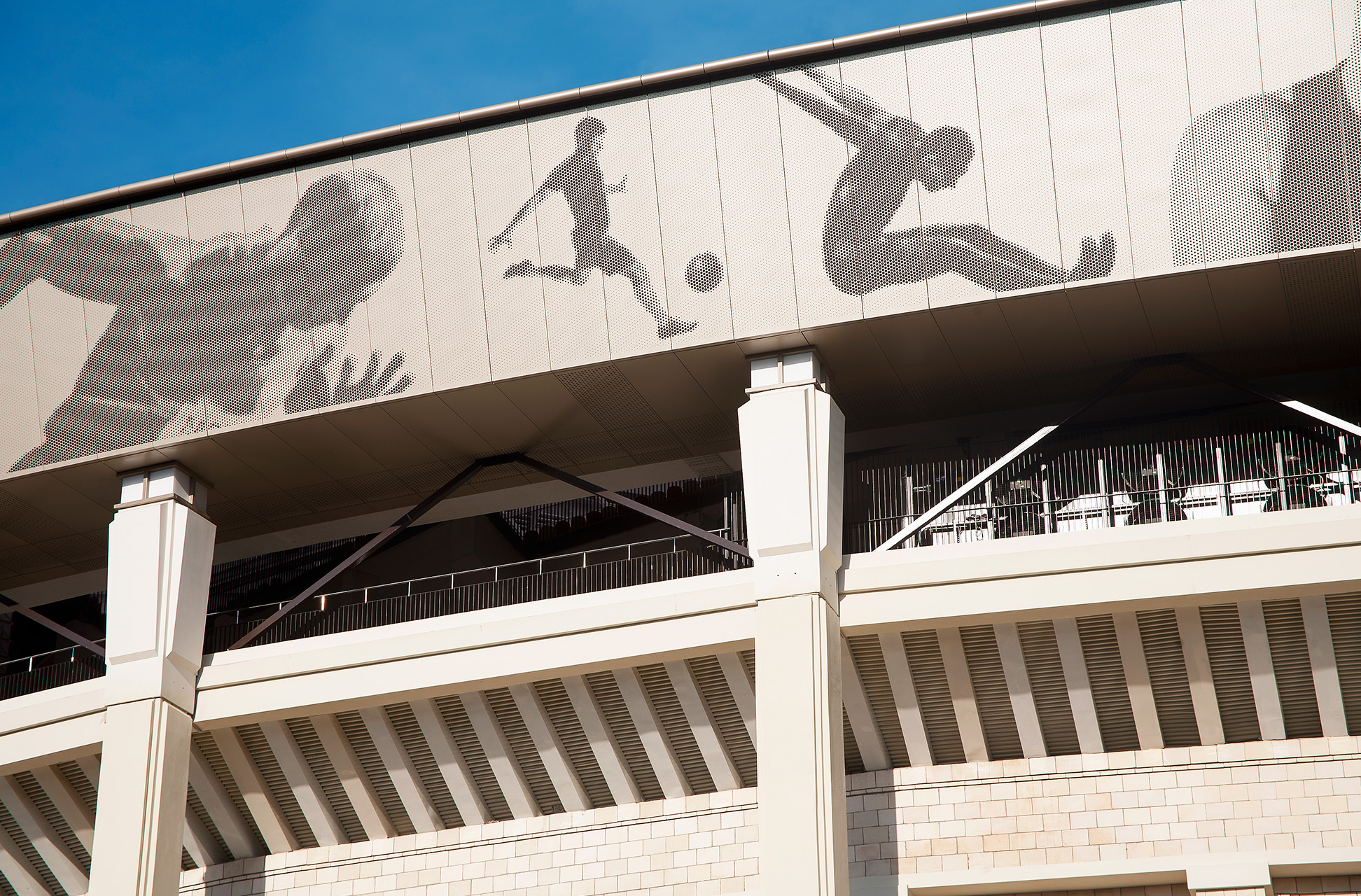
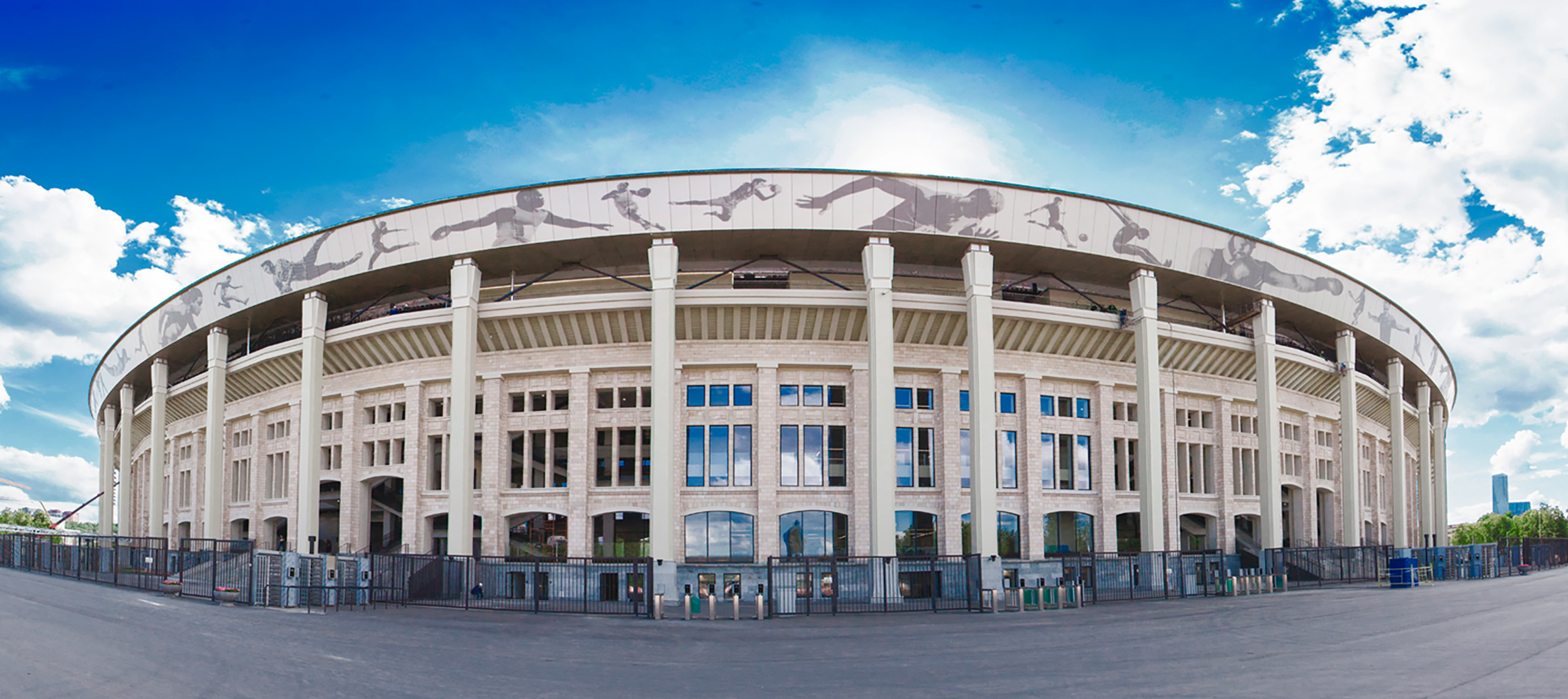
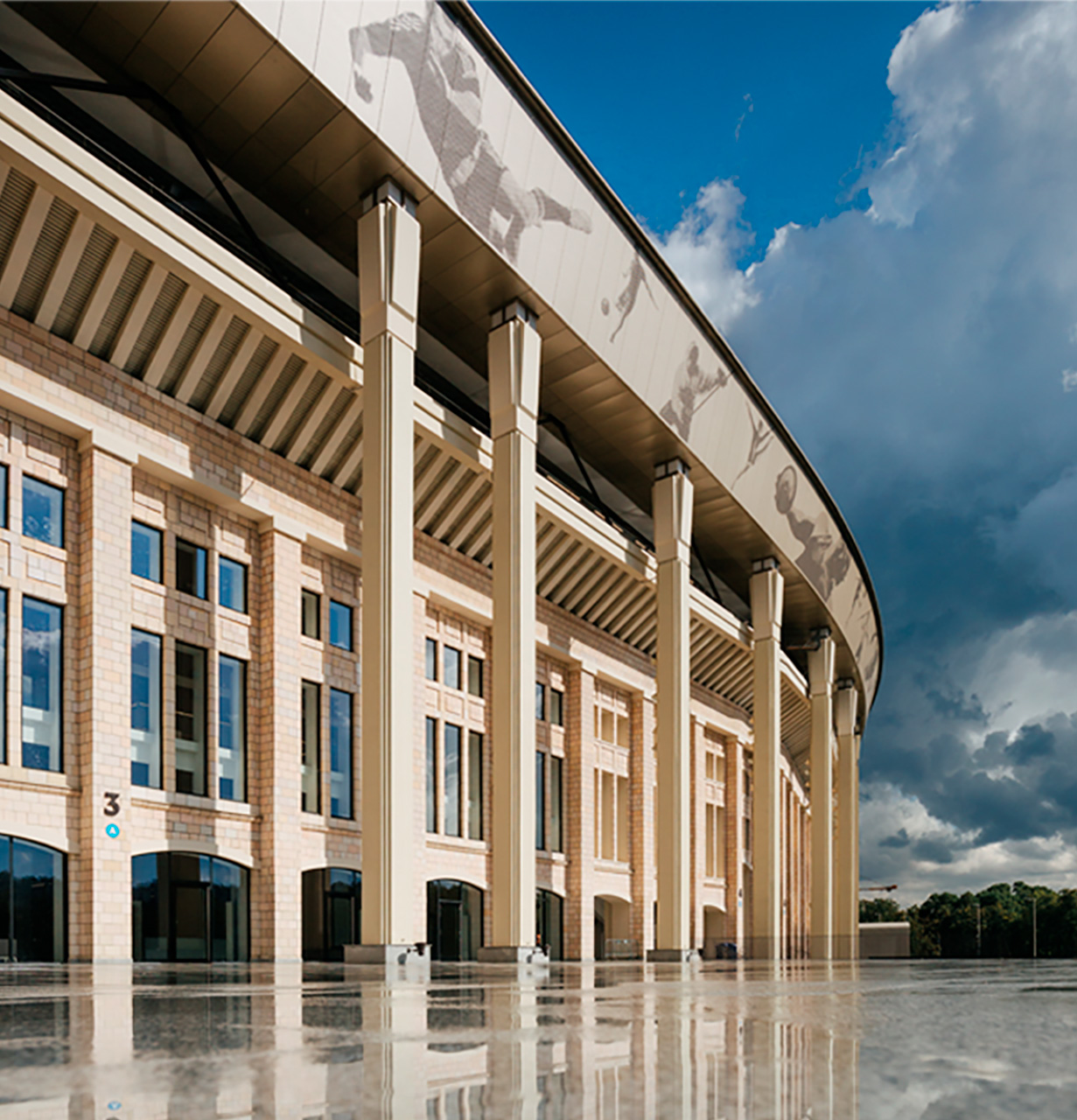
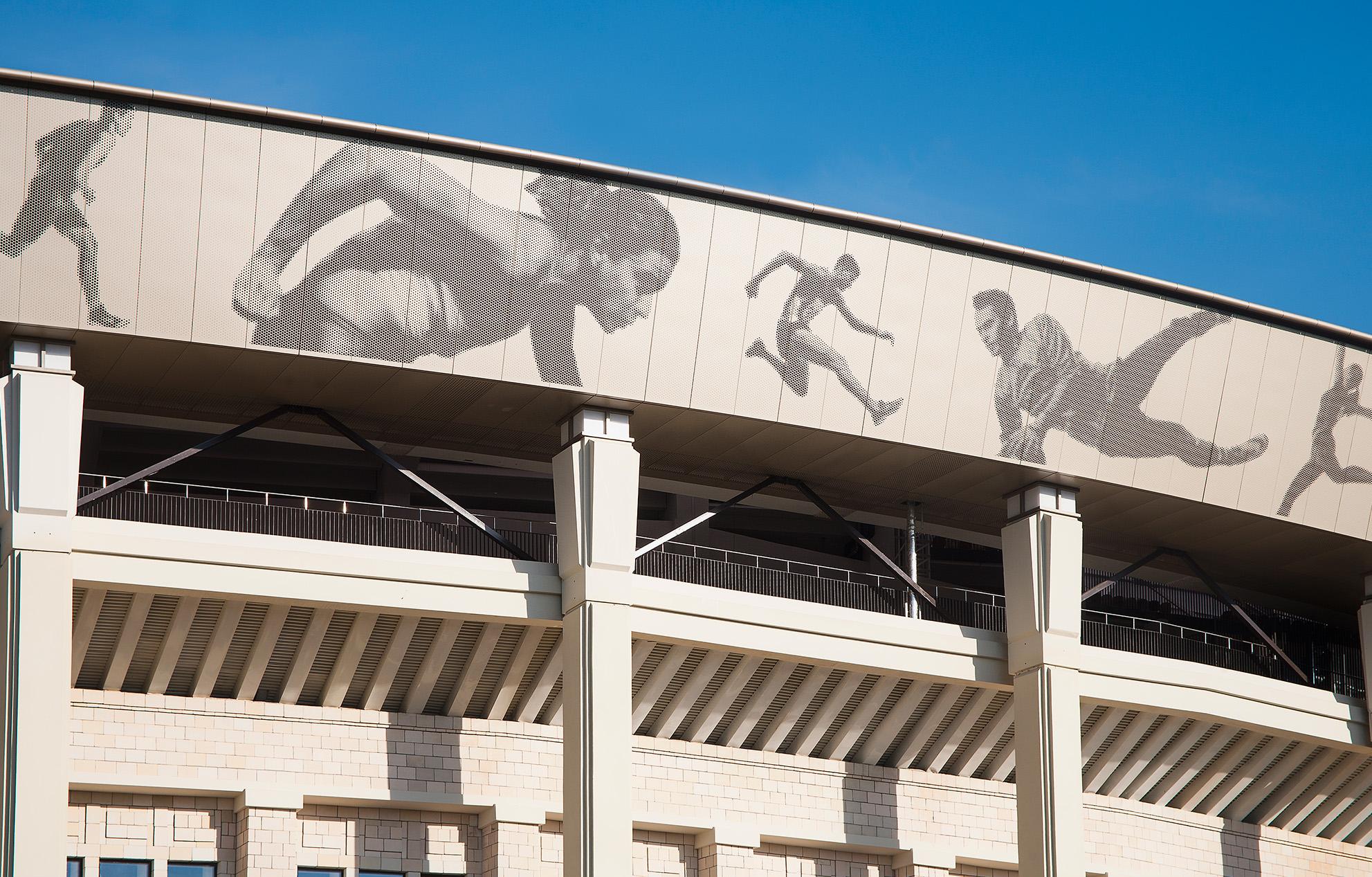
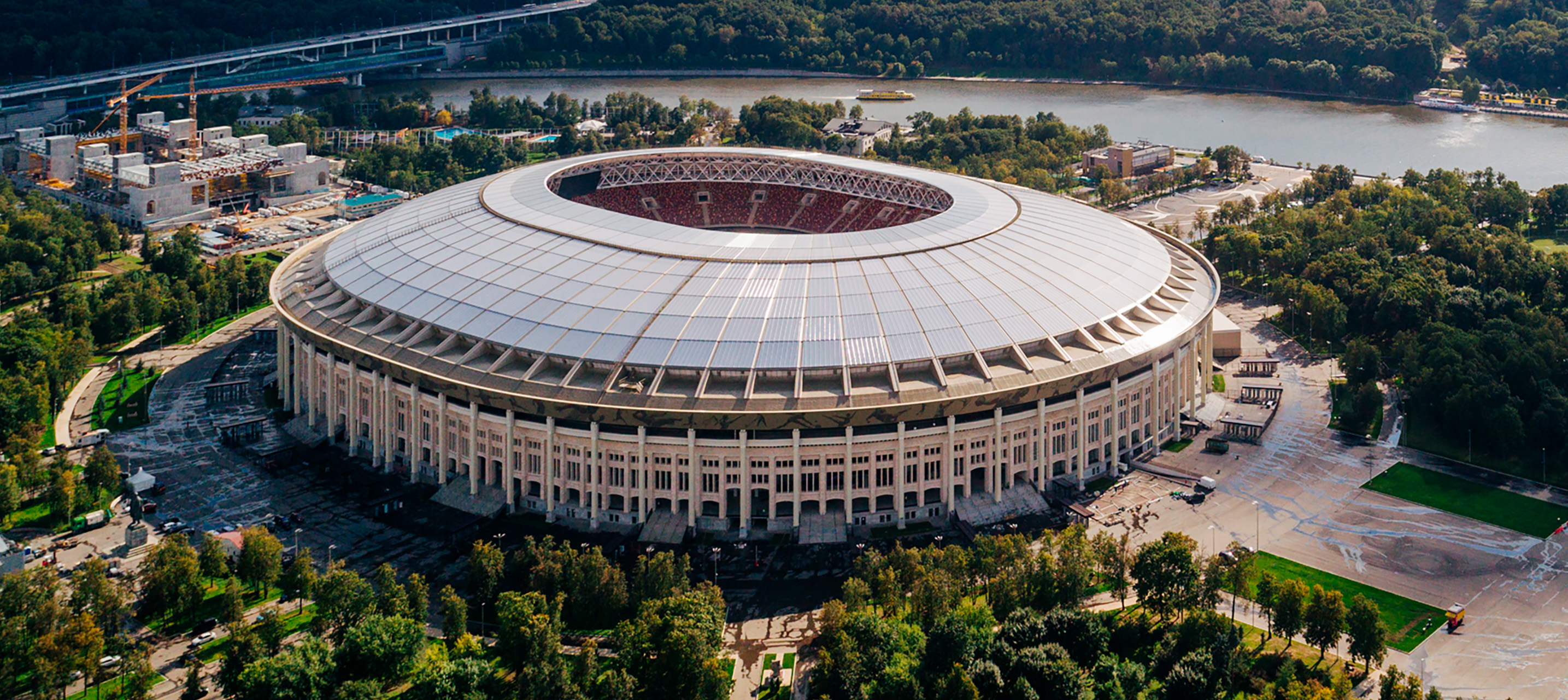
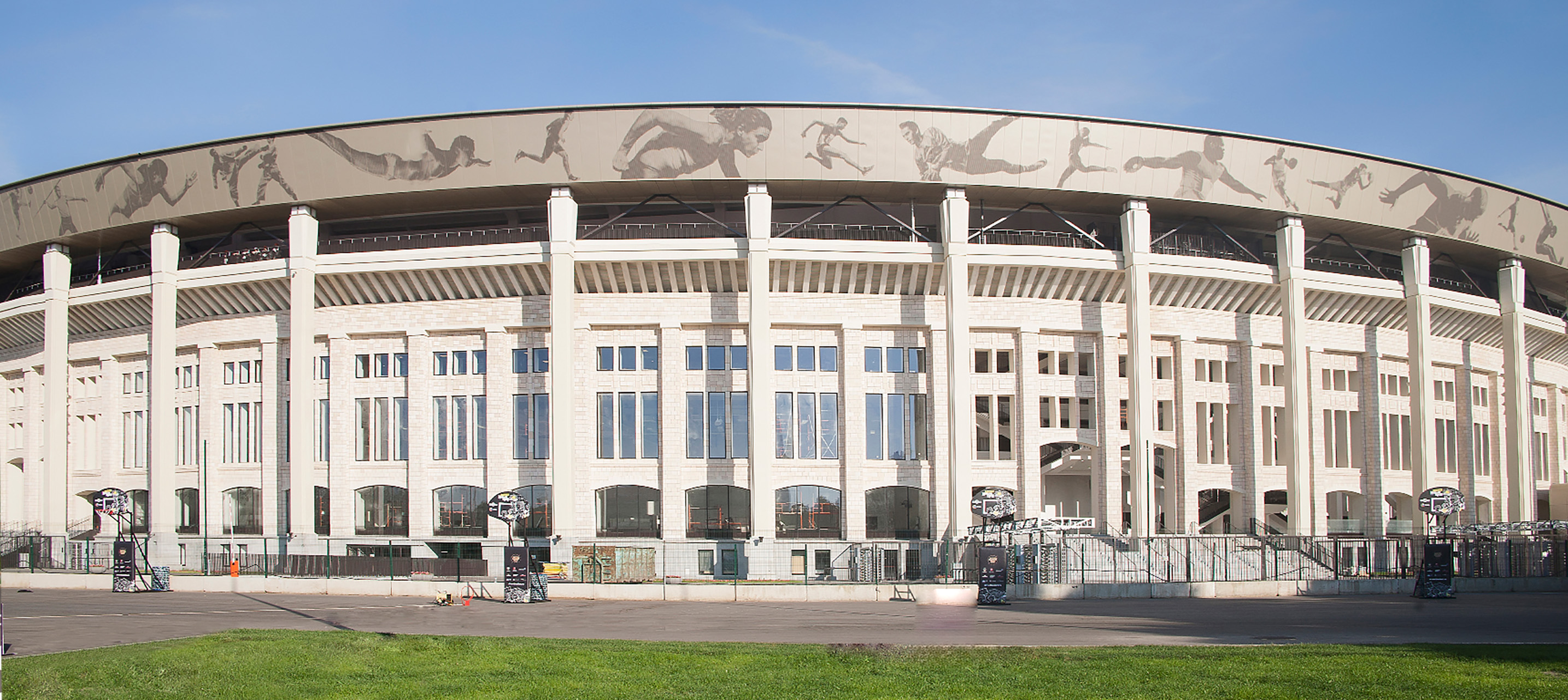
The Luzhniki Stadium decorative frieze is one of the key elements of the updated facade of the Grand Sports Arena. A wide strip of perforated pre-painted aluminium wraps around the stadium perimeter and forms images of athletes, inspired by the plasticity of ancient Greek vase painting.
The pattern is composed of holes of varying diameters, allowing the metal surface to achieve a halftone effect and to change depending on viewing distance, angle, and lighting. The perforations simultaneously function as a graphic technique and provide the necessary facade ventilation.
Metal here becomes not merely cladding, but a full carrier of architectural graphics: a lightweight aluminium shell adds dynamism to the historic facade without disrupting its original appearance.
The frieze design was developed by Artemiy Lebedev Studio under the art direction of Artemiy Lebedev; the concept author is architect Sergey Choban.
Project type
Sports facilities
Product type
Perforated panels (S.Panels PERFORATED)
Material
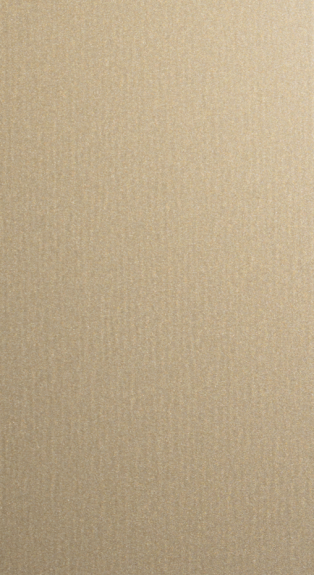
Pre-painted aluminium (S.Con)
Property location
Moscow
Color solution


SPICH
one of Russia's largest and most successful design bureaus. The bureau was co-founded by renowned architect Sergey Choban, with Igor Chlenov and Anton Pavlov serving as managing partners. SPICH specializes in the design of buildings and complexes of various functional purposes, the development of urban planning concepts, and the creation of public interiors and exhibition design projects.
Other projects


Order a sample
