

Facade perforated and corrugated panels S.Panels CORRUGATED AND PERFORATED
These are panels with complex geometry: longitudinal relief (corrugation) provides them with high rigidity and distinctive texture, while through-holes executed according to a specified pattern transform a solid surface into a "breathing" and light-transmitting screen. Thanks to the use of aluminium and polymer coatings, including decorative finishes (anodising, stone texture), the product retains all the advantages of metal facade systems.

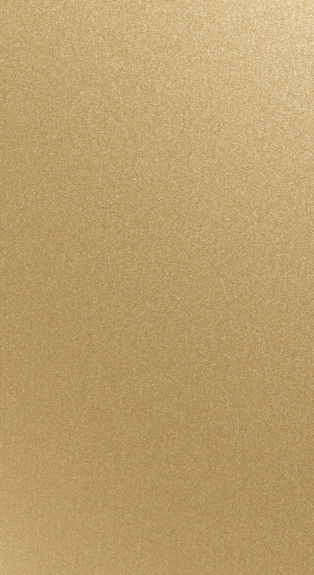
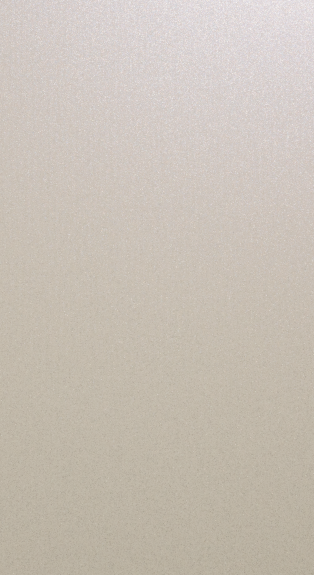
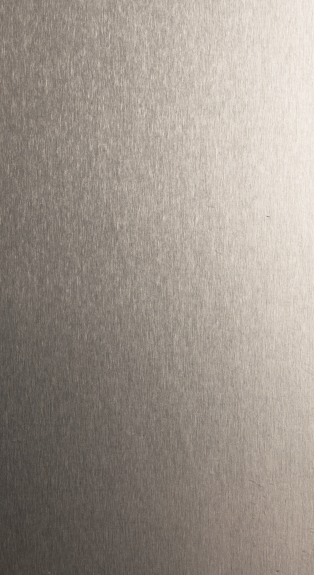


Even when cladding large areas, perforated panels do not create the effect of a massive wall, maintaining openness and airiness.
Product form: facade cassette or panel with flanging for installation.
Hole shape: round, square, slotted or custom (to order).
Pitch and diameter: calibrated to specific requirements for light transmission and design.
Overall dimensions: limited by equipment capabilities (length up to 4000 mm)
Wave pitch from 30×30 to 150×150 mm
• Parking and technical floor cladding: for natural ventilation of areas where exhaust gases or heat from equipment accumulate.
• Renovation of existing buildings: masking ventilation shafts and engineering systems on the facade while maintaining air exchange.
• Branded facades: applying logos or patterns via perforation, visible up close or in the dark with backlighting.
• Wall and ceiling cladding: creating acoustic comfort in combination with sound-absorbing materials placed behind the panels.


What are perforated and corrugated facade panels
Perforated panels are metal sheets (steel, aluminium, copper, brass) with holes (round, square, slotted) stamped or drilled with a specific pitch. The degree of perforation (percentage of open area) varies from 10% to 70%.
Corrugated panels are sheets with longitudinal waves (corrugations) of trapezoidal or sinusoidal shape. Corrugation gives the panel rigidity and allows spanning large distances.
Both types can be used independently or in combination with each other, creating unique facade solutions.
Advantages and applications of perforated panels
Where perforated panels are used
-
Ventilated facades. Panels are mounted on a substructure with an air cavity. Holes ensure air circulation, remove excess moisture, preventing condensation.
-
Solar shading screens. Regulate interior lighting, reduce building heat gain in summer.
-
Noise barriers. Along highways, railways, industrial enterprises. Perforation + sound-absorbing layer inside reduces noise level by 8–15 dB.
-
Decorative elements. Parking screens, technical floors, masking ventilation equipment.
Advantages of perforation
-
Ventilation. Air freely passes through holes, critical for ventilated facades.
-
Wind load reduction. Perforated panels have lower wind resistance than solid panels.
-
Play of light. Depending on lighting angle, the facade changes appearance - from nearly "solid" to semi-transparent.
-
Concealing defects. Minor surface irregularities, fastener marks and inevitable scratches visually "dissolve" on a perforated surface.
Advantages and applications of corrugated panels
Where corrugated panels are used
-
Ventilated facades. Vertical or horizontal corrugation creates a clear, rhythmic pattern.
-
Roofing. Panels with high corrugation (from 35 mm) withstand snow loads and drain water.
-
Industrial buildings. Hangars, warehouses, shops - quick construction at affordable cost.
-
Column and pylon cladding. Corrugation emphasises vertical lines.
Advantages of corrugated panels
-
Rigidity. Even thin steel does not deflect thanks to corrugation.
-
Metal savings. To achieve the same rigidity, a solid sheet would require greater thickness.
-
Fast installation. Large panels cover extensive areas with minimal joints.
-
Resistance to deformation. Does not "flutter" in wind, does not warp in sun.
Comparison of facade panel materials
| Material | Corrosion resistance | Weight | Price | Appearance | Recommendation |
|---|---|---|---|---|---|
| Galvanised steel + polyester | High | Heavy | Low | Any RAL color | Budget option: warehouses, hangars, garages |
| Galvanised steel + PVDF | High | Heavy | Medium | Any RAL color, fade-resistant | Building facades in any climate |
| Aluminium (pre-painted) | Very high | Light | High | Silvery or colored | High-rise building facades, coastal projects |
| Stainless steel | Maximum | Heavy | Very high | Silvery (matte/mirror) | Prestige projects, aggressive environments |
| Copper / Brass | Very high | Heavy | Elite | Golden, patina | Elite projects, restoration, boutiques |
Recommendation: for 80% of projects, galvanised steel with PVDF coating (service life 30–50 years) or aluminium (light and rust-free) is optimal.
Panel sizes and geometry
To find out the cost and sizes of perforated and corrugated panels for ventilated facades per m² in Moscow, several parameters must be considered.
Perforated panels
-
Metal thickness: 0.5–2.0 mm.
-
Hole diameter: 1–20 mm (round), up to 50 mm (slotted).
-
Hole pitch: from 3 mm.
-
Perforation percentage: 10–70%.
-
Hole shape: round, square, rectangular, slotted, to order - custom shapes.
Corrugated panels
-
Metal thickness: 0.4–1.5 mm.
-
Corrugation height: 8–114 mm.
-
Working width: 600–1250 mm (depends on profile).
-
Panel length: up to 13 m (to order).
Cost and sizes of perforated and corrugated panels for ventilated facades per m² in Moscow
Approximate prices (order from 500 m², galvanised steel 0.5 mm with polyester coating):
| Panel type | Complexity | Price per m² (without installation) |
|---|---|---|
| Corrugated (corrugation height 8–20 mm) | Standard | from 550 ₽ |
| Corrugated (corrugation height 35–57 mm) | Standard | from 650 ₽ |
| Perforated (round holes, pitch 10–20 mm) | Simple | from 700 ₽ |
| Perforated (round holes, pitch 5–10 mm) | Medium | from 850 ₽ |
| Perforated (slotted, custom holes) | Complex | from 1,200 ₽ |
Prices are approximate. Exact cost is calculated based on current metal price, coating type, perforation complexity and order volume.
Additional options:
-
PVDF coating - +30–50% to price.
-
Aluminium - 2–3 times more expensive than steel.
-
Stainless steel, copper, brass - 4–10 times more expensive than steel.
For large projects (from 2000 m²) discounts up to 10–15% are possible.
Why choose Cladding Solutions for your facade panels
If you have decided to buy facade perforated and corrugated panels for external cladding, working with us offers several advantages.
Own production
We manufacture panels ourselves rather than resell them. This guarantees quality control and fair pricing.
Any sizes and shapes
You are not limited by stock inventory. We will make panels to your specifications: width, length, hole shape, pitch, corrugation height.
Wide choice of materials
Steel, galvanised steel, aluminium, stainless steel, copper, brass - any metal to fit your budget and operating conditions.
Delivery throughout Russia
We ship products to any region of Russia through verified transport companies. Delivery to Moscow terminal is often free.
Technical support
We will help you select optimal metal, thickness, perforation type and diameter for your tasks (considering wind load, light transmission requirements and sound insulation).
Frequently asked questions
1. How does a perforated panel differ from expanded metal mesh?
A perforated panel is a sheet with holes; material between the holes remains solid. Expanded metal (mesh) is a grid where cells are separated by ribs, with almost no solid metal between them. Expanded metal is lighter and more "transparent", but less rigid.
2. What perforation percentage should I choose for a ventilated facade?
Optimal is 20–40%. This is sufficient for air cavity ventilation, but the facade does not look like a "sieve". At 50–70% the panel becomes semi-transparent, showing the insulation — this must be considered in design.
3. Can corrugated and perforated panels be combined?
Yes. For example, the main facade area uses corrugated panels, while accent zones (entrance, bay window) use perforated panels. This gives the building individuality.
4. How to maintain a perforated facade?
Maintenance is minimal. Rain washes away dust. For removing heavy soiling — soft cloth, water and neutral detergent. High-pressure washers are not recommended for perforated panels (pressurised water can penetrate the gap and wet the insulation).
5. What material should I choose for a downtown facade?
Optimal is galvanised steel with PVDF coating (service life 30–50 years, any color) or aluminium (light, rust-free). Stainless steel, copper and brass are for premium projects with corresponding budgets.
A modern, functional and aesthetic solution
Facade perforated and corrugated panels for external cladding are a modern, functional and aesthetic solution. Perforation provides ventilation, reduces wind load and creates a unique play of light. Corrugation provides rigidity and expressive rhythm. Together they open unlimited possibilities for architects and designers.
If you want to buy facade perforated and corrugated panels for external cladding from a manufacturer, contact Cladding Solutions. We will help you select optimal material, perforation type and diameter, pitch and corrugation height for your project. To find out the cost and sizes of perforated and corrugated panels for ventilated facades per m² in Moscow, contact our specialists. Delivery throughout Russia. Make your facade stylish, reliable and durable.