

Perforated panels S.Panels PERFORATED


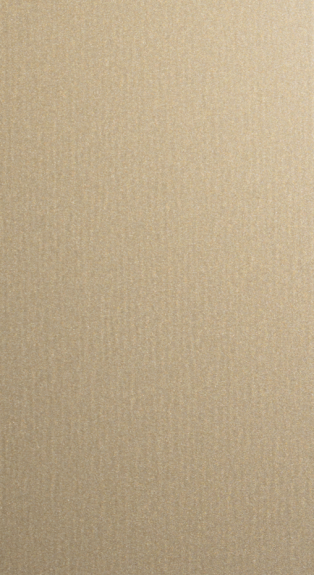

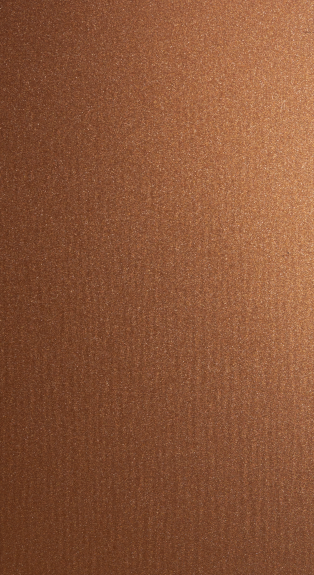
Metal thickness: from 0.7 mm to 2.0 mm (depends on panel size and wind zone).
• Hole diameter/size and pitch: selected to achieve the required perforation ratio (typically 10% to 60%).
• Flat sheet supply for subsequent cutting or bending on site is available on request.
• Sun protection screens: Installation on south-facing sides of buildings (offices, residential complexes) to reduce heat gain.
• Equipment masking: Covering external air conditioning units, ventilation shafts and pipelines while maintaining air access.
• Renovation and branding: Creating modern appearances for old buildings, applying logos and address plates by perforation method.
• Wall and ceiling cladding: In combination with sound-absorbing underlays (acoustic screens in cinemas, restaurants, open-plan offices).
• Decorative elements: Design of reception desks, lift lobbies, radiator screens.

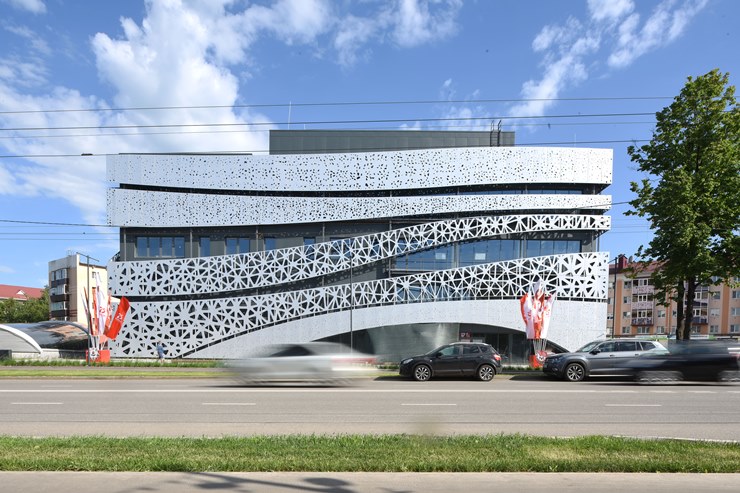


What are perforated facade panels
Perforated panels are metal sheets (aluminium, steel, stainless steel) with holes made by stamping or laser cutting. Holes can be round, square, slot-shaped or custom-shaped, arranged in a certain order (checkerboard, linear, random). The percentage of open area (degree of perforation) varies from 10% to 70%.
How perforated panels are manufactured
The process begins with coil or sheet metal. Using a perforating press or laser machine, holes of specified diameter and pitch are punched. Then the sheet can be painted (polyester, PVDF), subjected to bending or milling to create three-dimensional shapes. Finished panels are packaged and shipped to the customer.
Main advantages of perforated panels
-
Ventilation. Air passes freely through the holes, which is critical for ventilated facades — moisture does not accumulate in the insulation.
-
Reduction of wind load. Perforated panels have lower wind sail effect than solid sheets.
-
Play of light and shadow. Depending on the angle of lighting, the facade changes its appearance — from almost "solid" to semi-transparent.
-
Concealing defects. Minor substrate irregularities, fastening marks and inevitable scratches visually "disappear" on a perforated surface.
-
Sound absorption. In combination with acoustic filler, panels can be used as noise protection screens.
Aluminium or steel — which to choose?
| Characteristic | Aluminium | Steel (galvanised with coating) |
|---|---|---|
| Weight | Light (3 times lighter than steel) | Heavy |
| Corrosion resistance | Very high (does not rust) | High (depends on galvanising and coating) |
| Strength | Medium | High |
| Price | High | Low / medium |
| Service life | 40–60 years | 30–50 years (PVDF) |
| Recommendation | Facades of high-rise buildings, regions with marine climate, facilities with high durability requirements | Budget option: warehouses, hangars, low-rise buildings |
Tip: for standard facades in Moscow and the region, steel with PVDF coating is often chosen (durability 30–50 years). Aluminium — for high-rise buildings (lightness reduces load on the frame), facilities near the sea and projects with increased corrosion resistance requirements.
Sizes and geometry of perforated panels
To find out the cost and sizes of perforated aluminium panels for building facades, steel per m² in Moscow, you need to consider several parameters.
Parameters of aluminium panels
-
Sheet thickness: 0.8–4.0 mm (for facades 1.5–2.5 mm is optimal).
-
Sheet width: up to 1500 mm (standard 1000–1250 mm).
-
Sheet length: up to 6000 mm (on request — up to 12 m).
-
Color: any from RAL catalog, as well as anodising (silver, bronze, gold, black).
Parameters of steel panels
-
Sheet thickness: 0.5–2.0 mm (for facades 0.7–1.5 mm is optimal).
-
Sheet width: up to 1250 mm.
-
Sheet length: up to 6000 mm.
-
Coating: polyester (PE) or PVDF.
Perforation
| Type of openings | Diameter / size | Pitch (distance between centers) |
|---|---|---|
| Round | 1.5–20 mm | from 3 mm |
| Square | 3×3 – 50×50 mm | from 5 mm |
| Slot (horizontal/vertical) | width 2–10 mm, length up to 100 mm | from 5 mm |
| Custom (stars, honeycombs, logos) | on request | on request |
Percentage of perforation:
-
10–30%: light perforation — facade looks almost solid.
-
30–50%: medium — pattern is clearly visible, good ventilation.
-
50–70%: heavy — panel becomes semi-transparent, substructure can be seen through.
Cost and sizes of perforated aluminium panels for building facades, steel per m² in Moscow
Approximate prices (order from 500 m², standard perforation with round holes, pitch 10–20 mm):
| Material | Thickness | Price per m² (without installation) |
|---|---|---|
| Steel (galvanised) + polyester | 0.5 mm | from 700 ₽ |
| Steel (galvanised) + polyester | 0.7 mm | from 800 ₽ |
| Steel (galvanised) + PVDF | 0.5 mm | from 900 ₽ |
| Steel (galvanised) + PVDF | 0.7 mm | from 1 000 ₽ |
| Aluminium (uncoated) | 1.5 mm | from 1 800 ₽ |
| Aluminium (coated, polyester) | 1.5 mm | from 2 200 ₽ |
| Aluminium (coated, PVDF) | 1.5 mm | from 2 600 ₽ |
| Aluminium (anodised) | 1.5 mm | from 3 200 ₽ |
Prices are approximate. The exact cost is calculated based on the current metal rate, perforation complexity, coating type and order volume.
Additional options affecting price:
-
Fine perforation (diameter 1.5–3 mm) — + 20–40%.
-
Slot or custom perforation — + 30–50%.
-
Large sheet size (over 3000×1500 mm) — surcharge for non-standard.
-
Mirror polished aluminium — + 50–100%.
For large projects (from 2000 m²) discounts up to 10–15% are possible.
Where perforated panels are used
Ventilated facades
The most common application. Panels are mounted on a substructure with an air cavity. Perforation ensures moisture escape from the insulation and reduces wind load.
Suitable for: office centers, shopping malls, residential buildings, airports, train stations.
Sun protection screens
Panels with large perforation (40–60%) are installed in front of glazing. They reduce summer room heating but maintain natural lighting.
Suitable for: buildings with large glazing areas.
Noise protection screens
Along highways, railways, industrial facilities. Perforated sheet with acoustic filler (fiberglass, basalt fiber) reduces noise level by 8–15 dB.
Suitable for: roads, bridges, industrial zones.
Equipment masking
Technical floors, ventilation shafts, external air conditioning units — all can be concealed behind a perforated screen. Equipment is ventilated but not visible from the street.
Suitable for: any buildings.
Why choose to buy perforated panels from Cladding Solutions
If you decide to buy perforated aluminium panels for building facades or steel ones, working with us provides several advantages.
Own production
We manufacture the panels ourselves, not resell them. This guarantees quality control and fair prices.
Any sizes and perforation shape
You are not limited by warehouse stock. We will make panels in your sizes and perforation according to your drawing (round, slot, or logo-shaped).
Wide choice of materials
Aluminium, steel, stainless steel — any metal within your budget and operating conditions.
Delivery throughout Russia
We ship products to any region of Russia through verified transport companies.
Technical support
We will help you select the optimal thickness, perforation percentage and cell size for your tasks (taking into account wind load, light transmission requirements and sound insulation).
Frequently asked questions
1. How is a perforated panel different from expanded metal (EM)?
A perforated panel is a sheet with holes, the material between the holes remains. Expanded metal is a mesh where cells are divided by ties, with almost no solid metal between them. Expanded metal is lighter and more transparent, but less rigid and does not hold its shape as well.
2. What perforation percentage to choose for a ventilated facade?
Optimally 20–40%. This is sufficient for air cavity ventilation, but the facade does not look like a "sieve". At 50–70% the panel becomes semi-transparent — consider that insulation or substructure will be visible behind it.
3. Can steel perforated panels be used for a residential building facade?
Yes, but only with mandatory polymer coating (PVDF). Uncoated galvanised steel will dull over time and may develop white bloom. PVDF coating provides durability of 30–50 years and any color.
4. How to care for a perforated facade?
Maintenance is minimal. Rain washes away dust. For heavy soiling — soft cloth, water and neutral soap. Do not use abrasives, acids and high-pressure washers (water under pressure penetrates the gap and can wet the insulation).
5. What is the service life of aluminium perforated panels?
Under normal conditions (urban environment, not by the sea) — 40–60 years. Aluminium does not rust, and PVDF paint retains color for 25–40 years. Anodised aluminium lasts longer than painted.
Durable and aesthetic solution for ventilated facades
Perforated aluminium facade panels for buildings are a light, durable and aesthetic solution for ventilated facades. Aluminium does not rust, is not afraid of sea air and temperature fluctuations, and perforation ensures insulation ventilation and creates a unique play of light and shadow.
If you want to buy perforated aluminium panels for building facades or steel ones, contact Cladding Solutions. To find out the cost and sizes of perforated aluminium panels for building facades, steel per m² in Moscow, contact our specialists. Delivery throughout Russia. Make your facade modern, functional and unique.